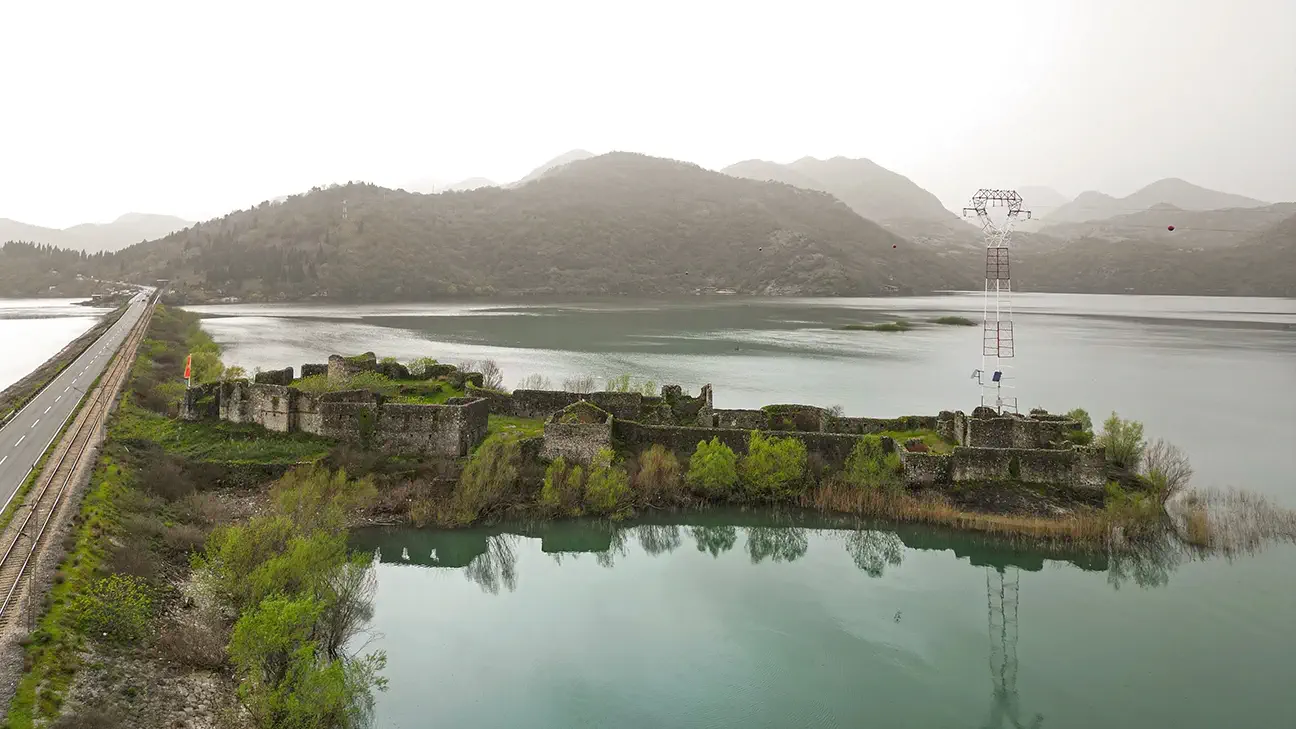
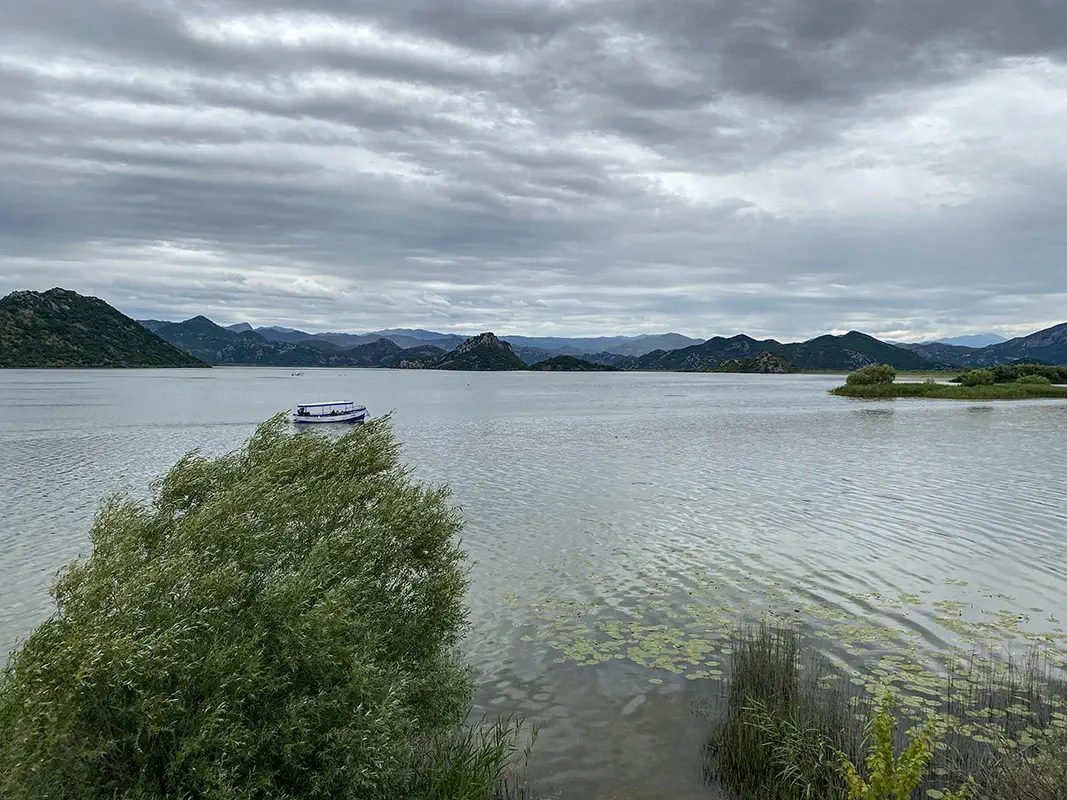
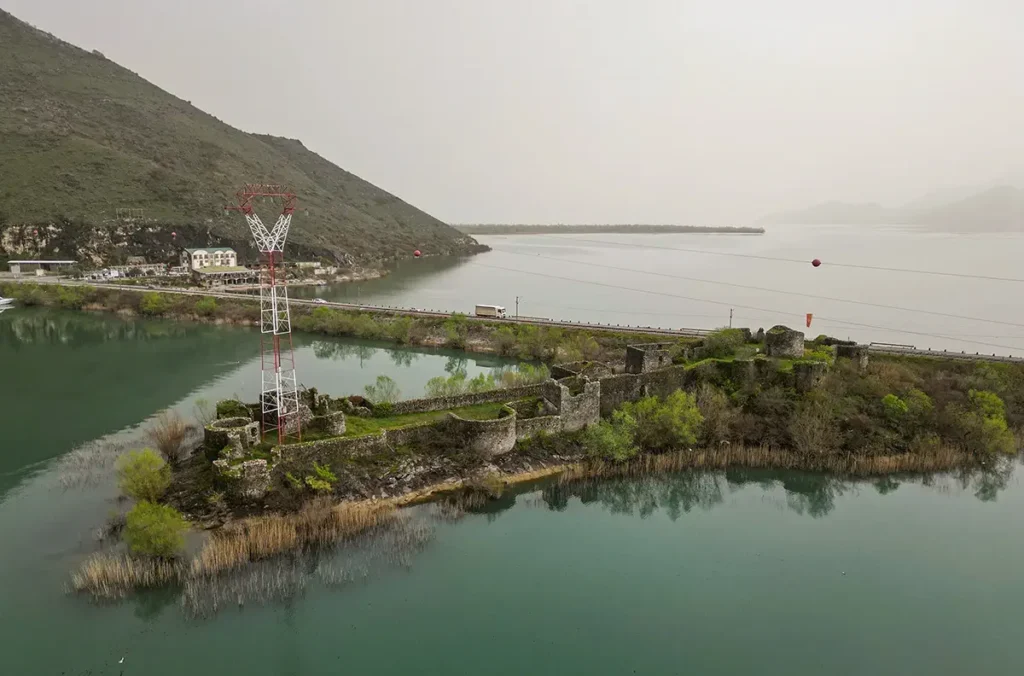
Lesendro, also known as «Lesander», is a dilapidated 19th-century fortress located on an island of the same name, washed by the waters of Lake Skadar. Historically, the island was located on an important regional trade route from Crmnica (a district in the northwestern part of the lake, centered in the village of Vir (Virpazar), which was famous for its wealth and fertility) to the Crnojević River. In addition, it was easy to control the surrounding waters from which the fishermen settled. This location exacerbated the constant disputes over the ownership of the island between the Ottoman Empire and Montenegro.

History of the fortress
According to the most popular version, the first fortifications (in the form of a watchtower on the south side and a small rectangular fort on the north side) appeared on the island at the will of Montenegrin Prince Peter II Petrovic Njegoš in 1832. It is not known today whether it was a completely new construction or a reconstruction of the previous fortifications.
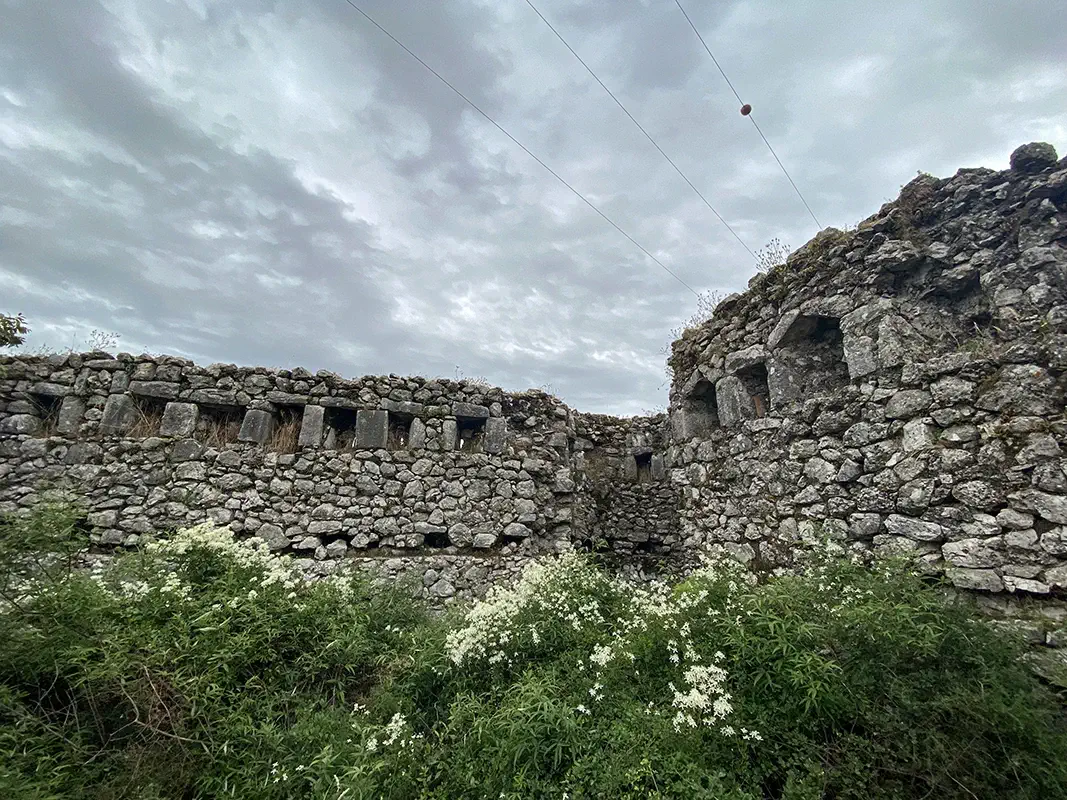
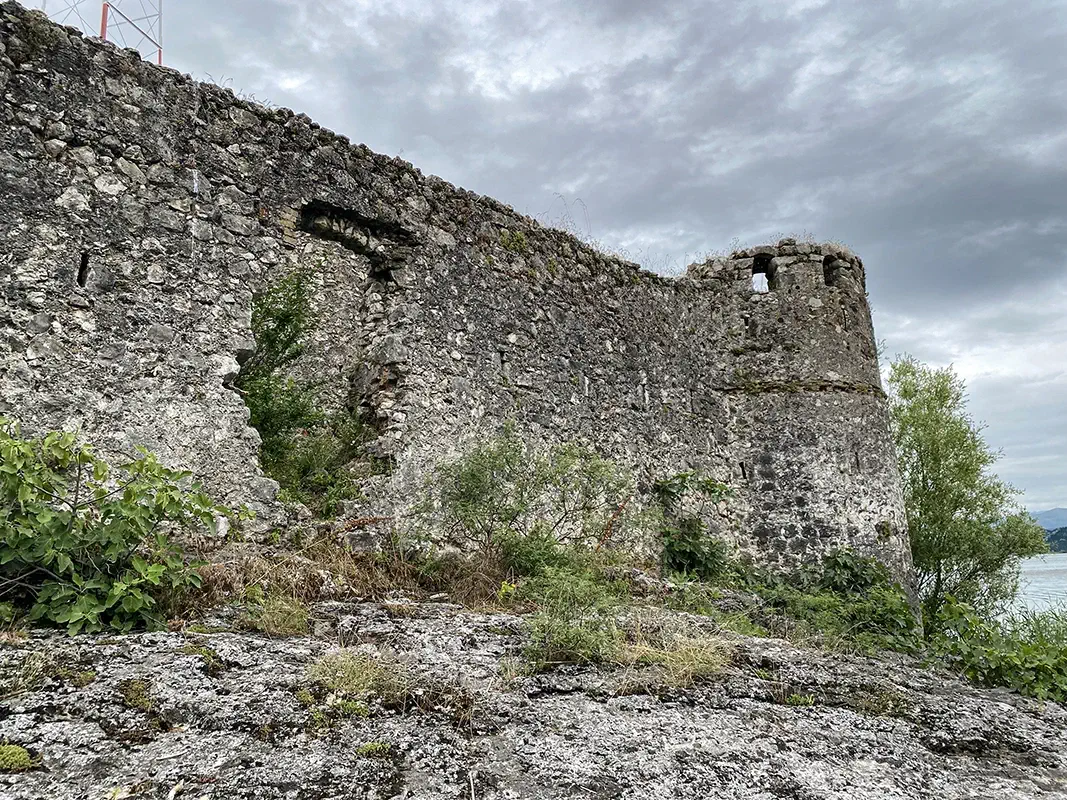
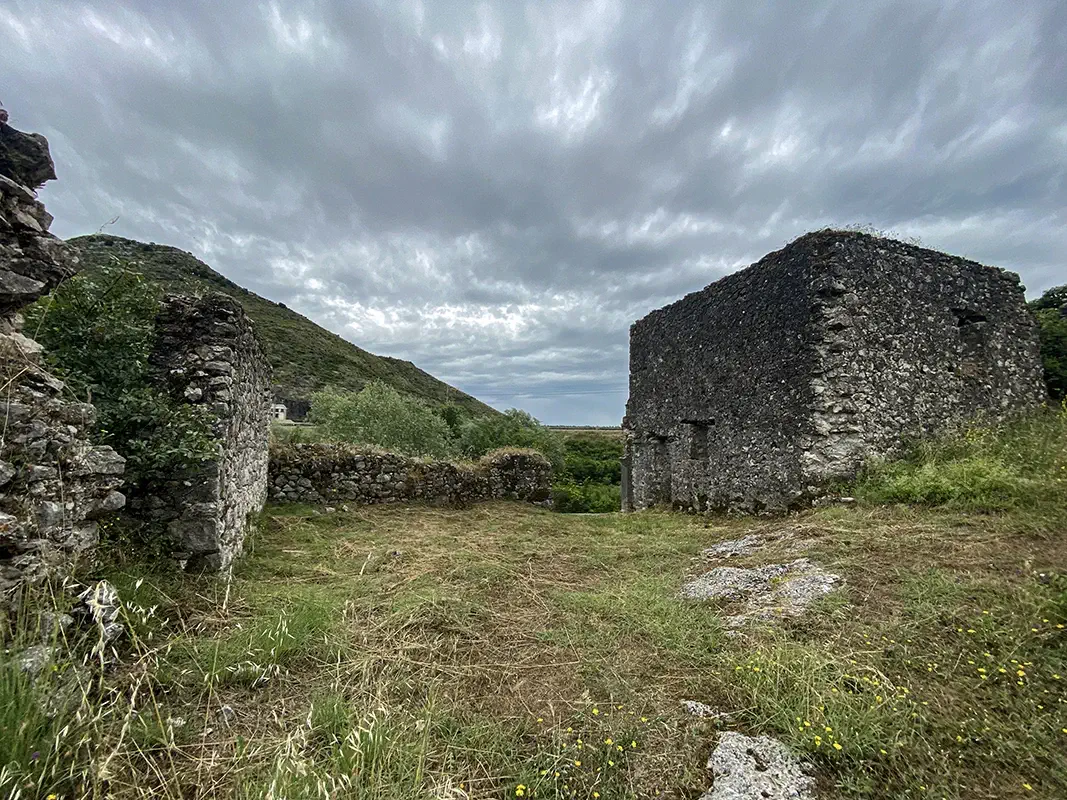
According to an alternative version, the fortifications on the island (or some part of them) were built in March 1843, and the garrison was 20-30 men. However, in the memoirs of the Russian scientist Nikolai Nadezhdin from 1842, it is mentioned about the garrison of 2 men, one of whom «went yesterday to Cetinje for bread».
How Lesendro Island came under Ottoman rule
In 1843 the struggle for land between Montenegro and the Ottoman Empire intensified:
- from the north, the vizier of Herzegovina Ali Pasha Rizvanbegović-Stocević claimed lands near Grahovo
- from the south, the newly appointed vizier of Skadar Pashalik, Osman Pasha Skopljak, was eyeing the coastal territories
In September 1843, Ali Pasha Rizvanbegovic-Stocevic at the head of ten thousand troops advanced on Grahovo. The Montenegrin prince had to urgently prepare a response: he mobilized the Katun, Crmnic and Rijeka nahiyahs and moved north
Looking ahead, it is worth noting that Grahovo was eventually left to the Montenegrins. The clash ended with the signing of a treaty under which the disputed territories were assigned to Montenegro, and in return the locals had to pay a certain amount to the Turkish authorities.
Understanding the seriousness of the situation in the south, before leaving, Peter II Petrović Njegoš offered Vukola Đukanović, a senator who was in charge of the defence of the islands of Lesandro and Vranjina, to reinforce his troops, but the latter refused, assuring him that his own men would suffice.
On 16 September 1843, during the absence of the main Montenegrin army and Peter II, the vizier of Skadar, Osman Pasha Skopljak, attacked the islands of Lesendro and Vranjina. His army numbered 10-12 thousand soldiers and 65-75 boats, 15 of which were equipped with cannons. The two islands were defended by about 300 Montenegrins: 100 on Lesendro Island and another 200 on Vranjina Island.
Despite the huge numerical superiority in manpower, it was not possible to capture the island on the offensive. The defence lasted about 12 hours, after which the Montenegrins began to retreat to the rear in Dodoši. The islands, as well as the fortifications on Lesendro Island, were lost.
Having learnt about the events, Petar II Petrović Njegoš sent the troops of Crmnic and part of Rijeka nahiyah to help, which stopped the offensive of Osman Pasha Skopljak. However, now the Montenegrins had to repel the fortified island. Peter II ordered the installation of cannons on the Thin Cape (Tanki Rt), but the means of attack were clearly insufficient.
This event greatly hurt the pride of Peter II, he considered this arrangement a betrayal and was very worried about the loss of territories on the lake.
Lesendro Fortress under Ottoman rule
After capturing the islands of Vranjina and Lesendro, the Turks immediately began to fortify the new territories. Several watchtowers were built on the shore, and walls appeared on Lesendro Island, which turned it into a fort island. The garrison of the fortress had 7 cannons and about 500 Ottoman soldiers. In addition, boat patrols with cannons were launched on the lake, and another fortress was built on an island in the waters of Lake Skadar — Grmožur.
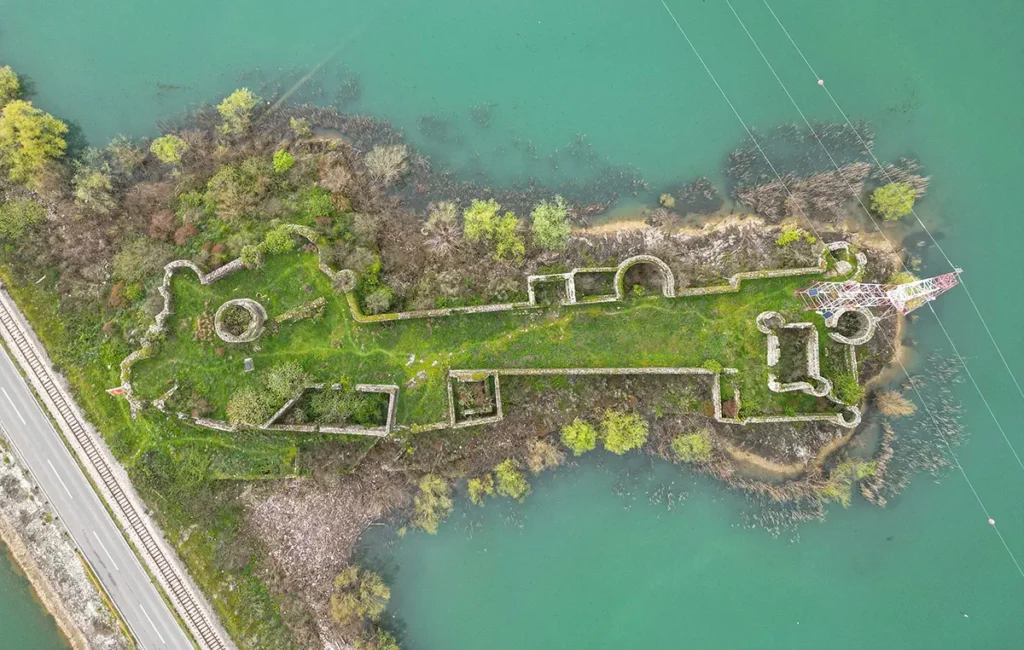
Realising the complexity of the situation, the Montenegrins, by order of Peter II, erected a watchtower near Virpazar to control the situation on the lake. However, Montenegrin forces were clearly insufficient for any active actions. The issue was then tried to be resolved diplomatically, but neither the Russian Empire nor Austria-Hungary was able or willing to do anything about it.
Seeing that diplomacy did not solve the problem, in 1844 Peter II decided to order the construction of five large boats for 50-60 people with artillery guns on them. In his opinion, such a fleet could help the Montenegrins to repel the islands. However, neither the Russian Empire nor Austria-Hungary wanted to break the fragile peace with the Ottoman Empire for the sake of Montenegro and forced Montenegrins to abandon the idea.
For the rest of his life, the Prince of Montenegro sought ways to regain what he had lost, but he died of tuberculosis on 31 October 1851, never having had the chance to regain the islands.
The loss of Lesendro kept all Montenegrins worried. That is why they organised constant sabotage raids on Turkish patrols. One of the most successful attacks took place in February 1858. Taking advantage of the bustle of the market day, as well as the fact that the sun sets early, four dozen Montenegrins on two boats stealthily approached the Turkish patrol. Despite the fact that the Turkish patrol boats were armed with cannons, the suddenness of the attack prevented their effective use. The hand-to-hand combat was left to the Montenegrins. At the end of the skirmish, the Montenegrins lost 5 men killed, and the Ottoman patrol from 24 to 40 killed and drowned. The Montenegrins also took one of the boats as a trophy, which they took to Rijeka Crnojevica after the battle. The cannon was dismantled and installed in front of the church in the settlement of Gornji Ceklin, as a symbol of victory.
After such a brazen attack, the Ottoman Empire reinforced the garrison of Lesendro fortress and fortified the walls. Patrols were also strengthened: the «Bojana», «Podgorica», «Skodra» steamships began patrolling the lake waters.
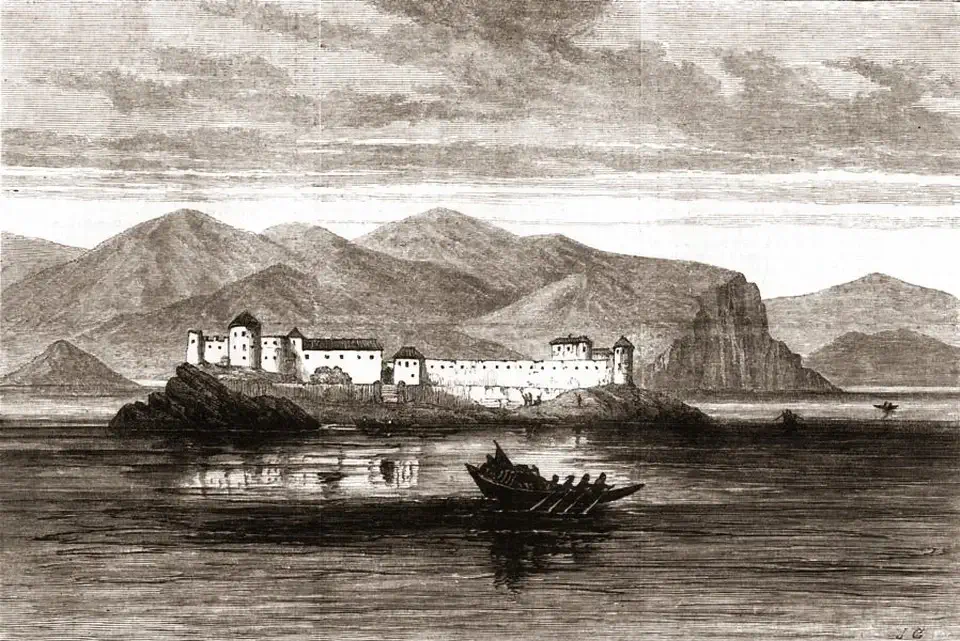
In 1862, the Montenegrins were defeated in the war with the Ottoman Empire and were forced to sign a peace treaty that recognised the Lesendro fortress as foreign territory.
Fort Lesendro today
In 1876-1878, a new Montenegrin-Turkish war broke out, in which Montenegro, led by Prince Nikola I Petrović, was victorious. On 30 January 1878, the islands of Lesendro and Vranjina, as well as a number of other territories, were ceded to Montenegro. The fortress on the island of Lesendro lost its strategic importance and was converted into a military warehouse. After the end of the World War I, it was no longer used even as a warehouse and was abandoned.
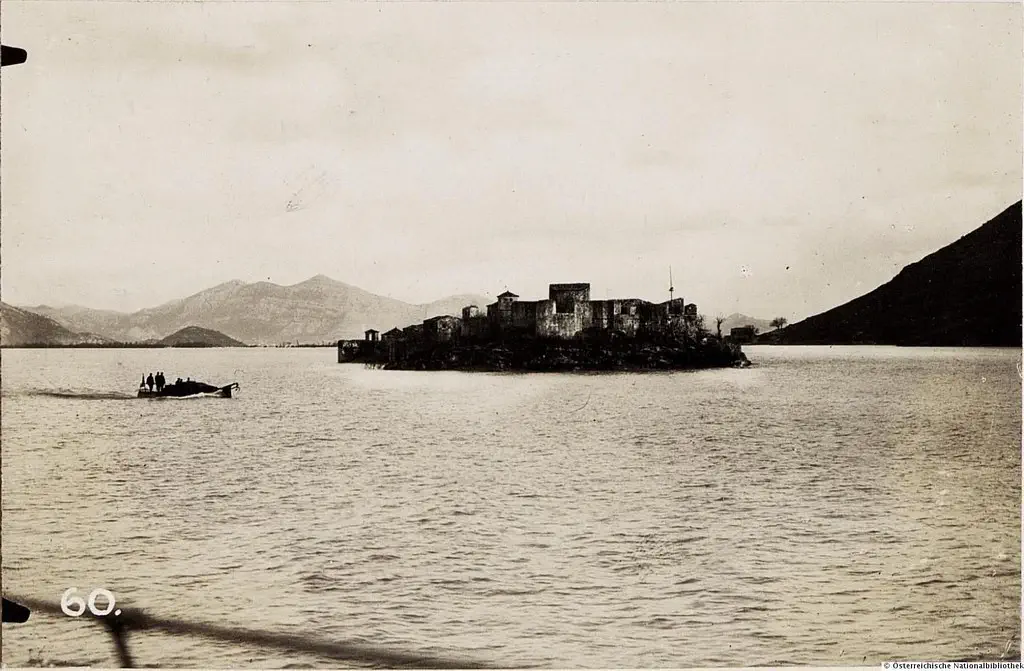
Photo from the Austrian archive. Source.
In 1949, Lesendro Fortress was declared an immovable cultural monument of Montenegro of the third category, as a cultural heritage of fortification architecture.
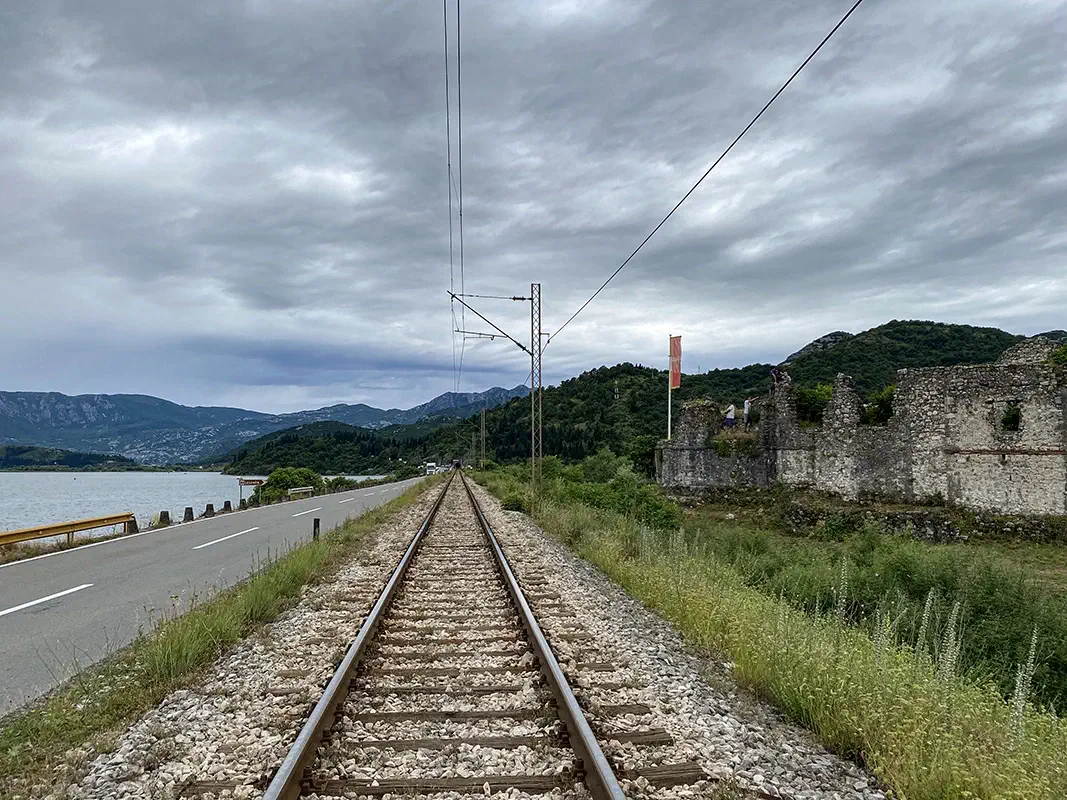
In 1959, Virpazar, Lesendro and Vranjina were connected by a dam with a motorway and railway tracks.
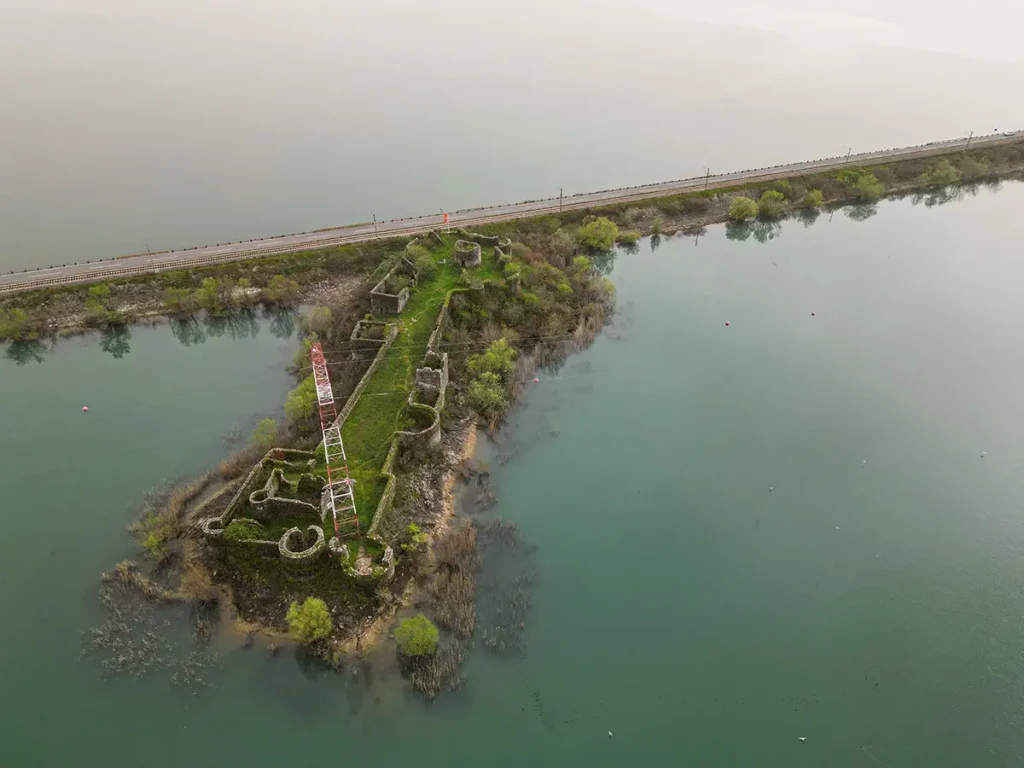
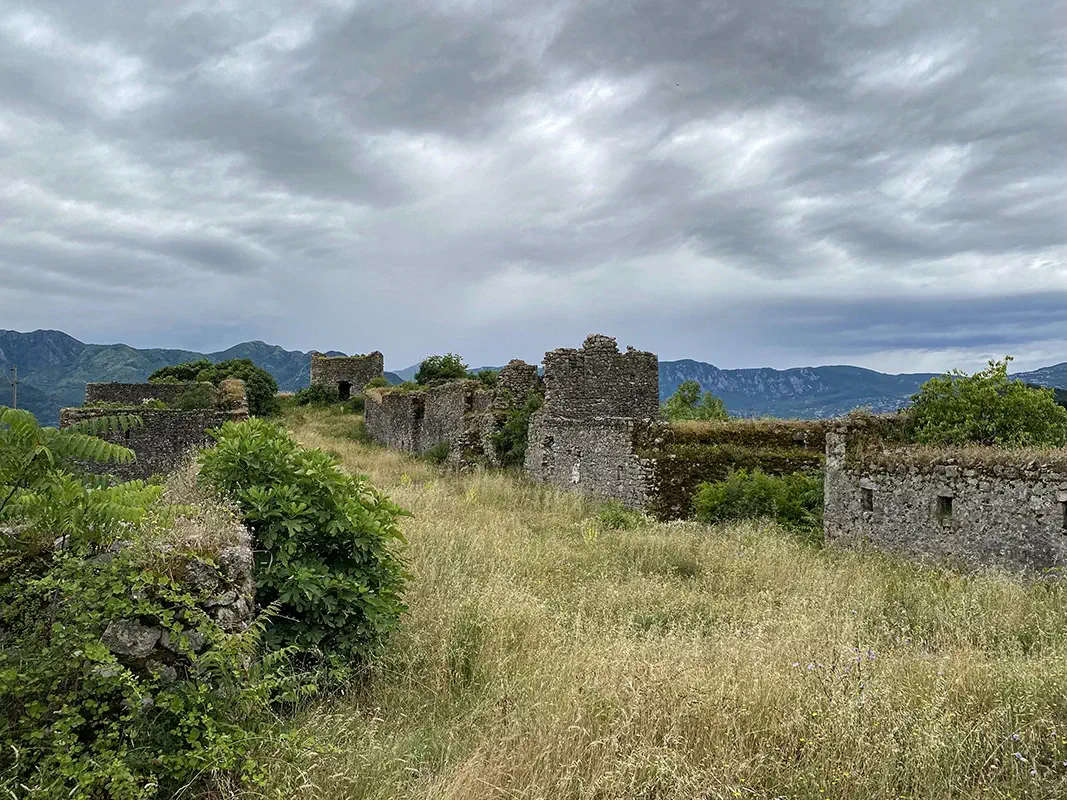
Today, Lesendro Fortress is a dilapidated fortification that offers beautiful views of the surrounding countryside. Its walls have two entrances, one east and one west. When visiting the fortress, it is worth noting that the western one is covered with stones. Entrance to the fortress is free.
Fort Lesendro. How to get there
There are many ways to get to Fort Lesendro: car, bus, train. The easiest and most convenient way to get there is by car. However, keep in mind that there is no parking space at the fortress itself.
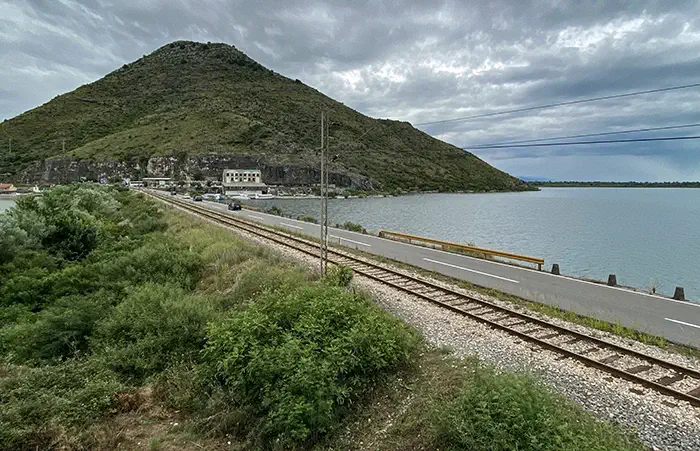
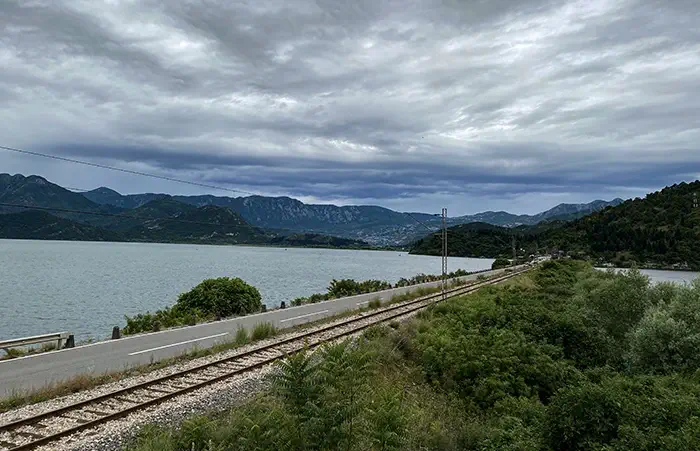
It is best to leave your car 400 metres from the Jezero restaurant. Here you can also visit the speciality shop of the largest Montenegrin winery, Plantaze. Parking is free.
Parking Location:
How to get to Fort Lesendro by train
Any train from/to the city of Bar passes by Lesendro Fortress. The station where you should get off is called «Vranjina». It is located 1.2 kilometres from the fortress.
If you are travelling from Podgorica to Bar, you will need to walk in the direction of the train, if from Bar to Podgorica, you will need to go back.
Railway Station Location:
How to get to Fort Lesendro by bus
If your starting point is in Bar or Podgorica, you can also get to Lesendro Fortress by intercity bus. Your stop as well as the railway station is called Vranjina and is located there.
