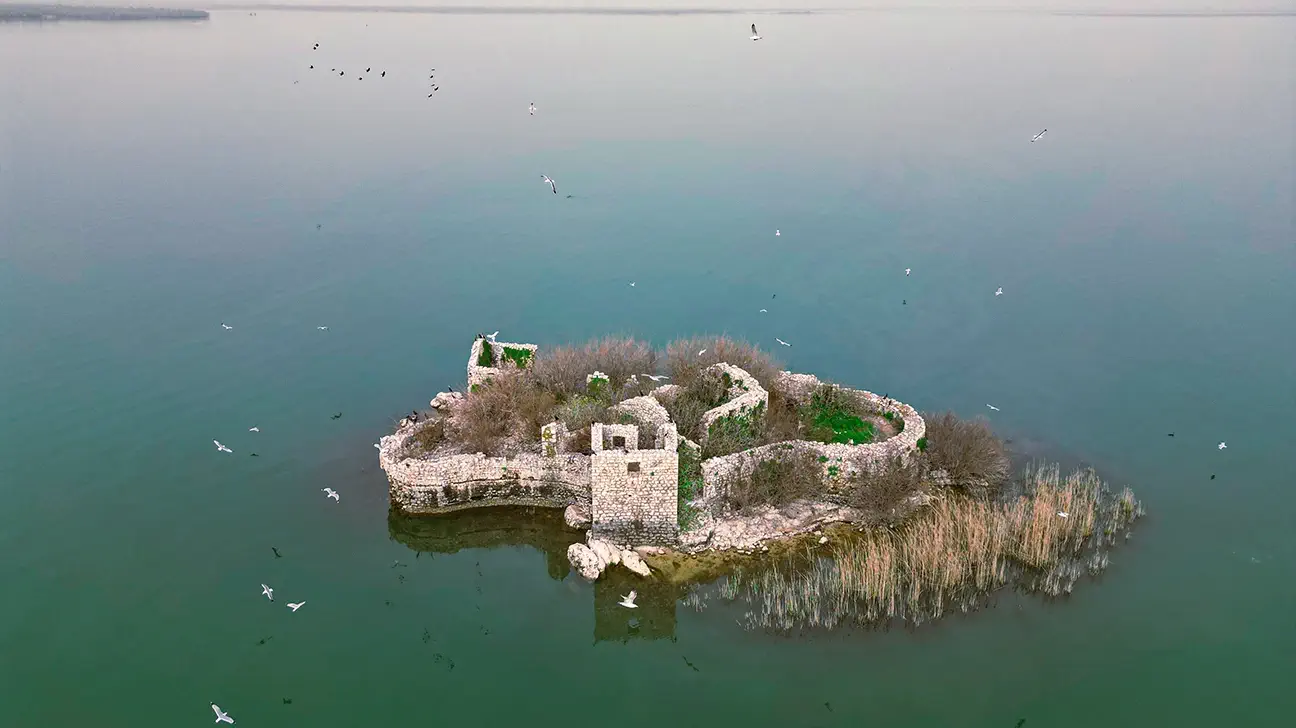
Grmožur (Tvrđava Grmožur) is a fortification located on a small island of the same name in the northwestern part of Lake Skadar in Montenegro, near the village of Godinje (Serbian: Годиње). It is one of the military-historical sites left from the period of conflicts between Montenegro and the Ottoman Empire. The fortress was erected by the Ottomans in the 1840s after they occupied the surrounding land.
Translated with DeepL.com (free version)
The structure covers an area of about 430 square metres and is surrounded by stone walls varying in thickness from 50 to 120 cm. Inside, the fortress was divided into two sectors, with a door built into the transverse wall. The entrance to the fortress was through two gates protected by towers. These passages are in the form of arched portals with stone jambs. All the buildings were constructed of stone and lime mortar, and the surviving walls are three to six metres high.
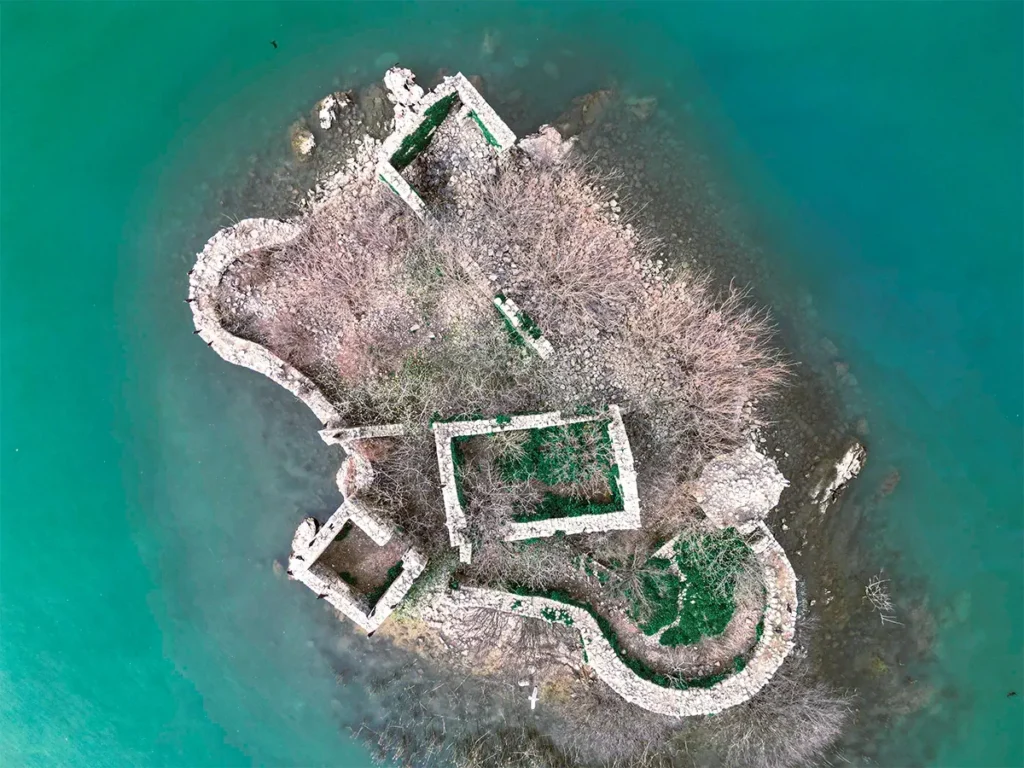
It is believed that Grmožur, together with the fortresses of Lesendro, Vranjina and Žabljak, formed a defence line that blocked the way from Montenegro and prevented communication between Crmnicka and Rijecka nahiyahs. Nowadays, the ruins of the fortress are overgrown with bushes, which makes it difficult to move around. There are also snakes on the island, so a visit requires caution.

History of construction
The Grmozur Fortress, known among the inhabitants of the Crmnica region as the «Island of Snakes», is one of the many fortifications left over from the Montenegrin-Turkish clashes. Built relatively late, in 1843, it played an important role both in the conflict itself and after its end. In the same year, the Turks captured another fortress on Lake Skadar, Lesendro, and together with Grmozur they created a single line of defence on the lake.
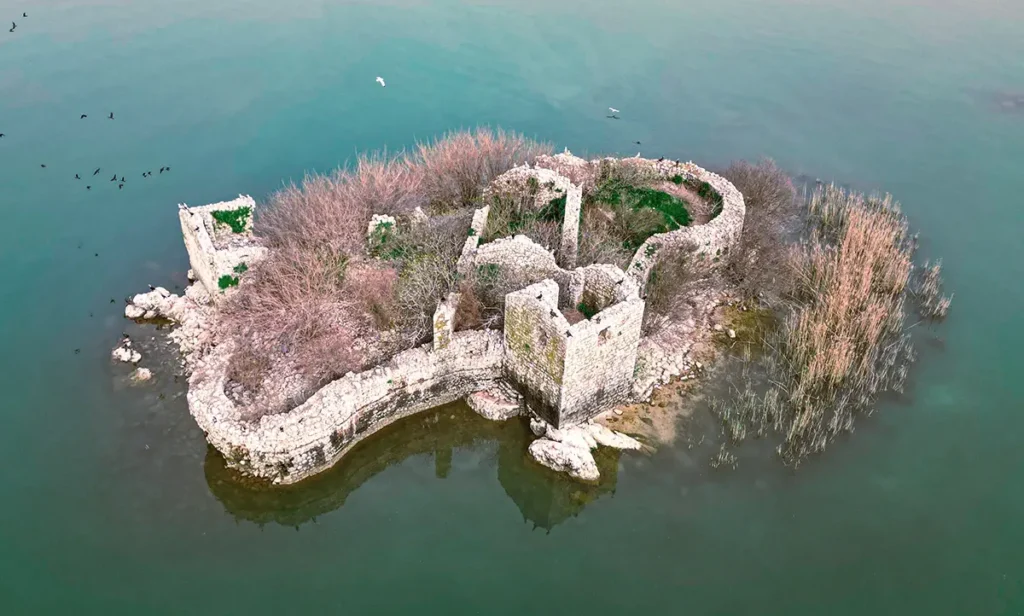
As a result of the war between Montenegro and the Ottoman Empire in 1876-1878, the Grmožur fortress was handed over to Montenegro. On 24 January 1878, Montenegrin troops took the fortress, and in the same year, by decree of King Nikola I, a prison was established here. Initially, it was used to hold criminals convicted of murder and other serious offences. But from the beginning of the 20th century, political prisoners were also imprisoned here, including Belgrade students who attempted to assassinate the king.
The prison had a strict rule: if any prisoner escaped, the guard who allowed the escape would take his place. However, one prisoner managed to escape by using the prison door as a raft to cross to the shore. The prison functioned until the Balkan Wars, after which it was moved to Jusovaca in Podgorica. At the beginning of the 20th century, the fortress was severely damaged by an earthquake and was no longer in use.
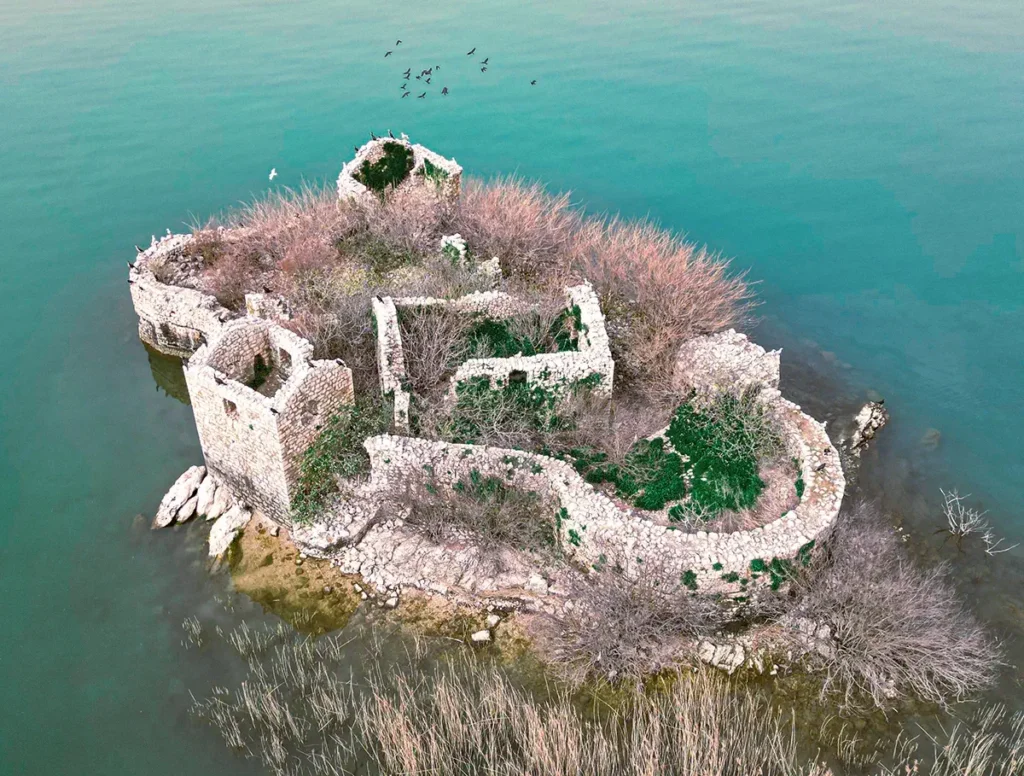
In 1949, the fortification was declared a protected monument of fortification architecture and included in the list of cultural heritage. Today, it is in a ruined state, but boat tours are often organised to it for tourists interested in the history of Montenegro.
How to get there
The fortress can only be reached by boat or, for example, SUP board. Alternatively, rent a boat in Virpazar, but be careful: as previously mentioned, snakes are often found on the island.
