
Fort (Fortress) Kosmac is a 19th-century defensive structure built by Austrian forces to defend and control the surrounding area. It was the southernmost defensive structure of the Austro-Hungarian Empire. Its purpose was to control and protect the southern border with Montenegro.


The fortress is located near the village of Brajići, on the top of the hill of the same name, overlooking the entire Budva Riviera and the Budva-Cetinje road, which was of great strategic importance at that time.

Description of the building
The total area of the entire defence complex was 1,064 m². This complex included a three-storey fort and an inner courtyard.
The building is made of finely worked limestone from local quarries. It stretches from north to south and consists of two main wings, symmetrically divided in the middle. There are two bastions on the corners, with a diameter of about 10 metres. Another central bastion is located in the middle of the southern facade, facing west, towards the sea. Its diameter is 14 metres.


A striking feature of the masonry, which was characteristic of the fortifications of the Austro-Hungarian Empire:
- The outer layer is made up of carefully shaped stones;
- The central or middle layer consists of small, irregularly shaped stones mixed with mortar;
- The inner layer consists of roughly worked stones of various shapes with no hint of any order.
At the time of its construction, a moat 2.5 metres deep and 2.5-3 metres wide was set up around the fortification. In front of the moat was a series of barbed wire fences.

The entrance consisted of a drawbridge 4.36 metres long and 1.9 metres wide and two gates connected by a 4.6-metre high wall, thus creating a 3.7 x 2.9-metre passage, which led to the fortified courtyard.
The gate was made of reinforced steel plates capable of withstanding musket fire.
The outer gate was 3.3 metres high and 1.9 metres wide. The inner gate was in the side wall, thus closing off the entrance to the inner courtyard from direct fire from outside. There was also a small gallery above the outer gate, which made it easier to control the passage.

The northern and southern parts had semi-circular towers projecting beyond the walls, called caponiers. They had to counteract the enemy forces who were able to cross the moat and get as close as possible to the castle walls.
Along the western wall, various rooms were arranged: a pigeon house with messenger pigeons, stables, showers, workshops, guest rooms, officers' mess hall and others.
There was also a water tank with a capacity of 108,000 litres, which was combined with a reserve tank with a capacity of 48,000 litres, located under the barracks. The tanks were also fitted with a drainage system to protect it from overflowing.


At the moment, the fortress is badly damaged. The ground floor is strewn with crumbling stones. The first floor is partly preserved, but there is no access to it, as the wooden staircase leading to the top has been destroyed. The second floor has not survived either.
Armament of Fort Kosmac
As of 1869 the garrison of the fortress consisted of 65 men (46 infantrymen from the 27th Battalion of the Yeagers and 19 men from the royal artillery battalion (k.u.k. Artilleriebataillon))
The 27th Yeager Battalion had 44 infantrymen:
- 1 Lieutenant (fortress commander);
- 1 sergeant;
- 1 staff sergeant;
- 4 junior sergeants;
- 3 patrol leaders;
- 1 chronicler;
- 33 soldiers.
The artillery staff numbered 19 men:
- 1 Lieutenant, Battery Commander;
- 1 ammunition specialist;
- 2 corporals;
- 9 artillery corporal;
- 6 artillerymen.
The fortress was armed with eight guns: four 6-pounder mountain guns and four 7-pounder mortars.
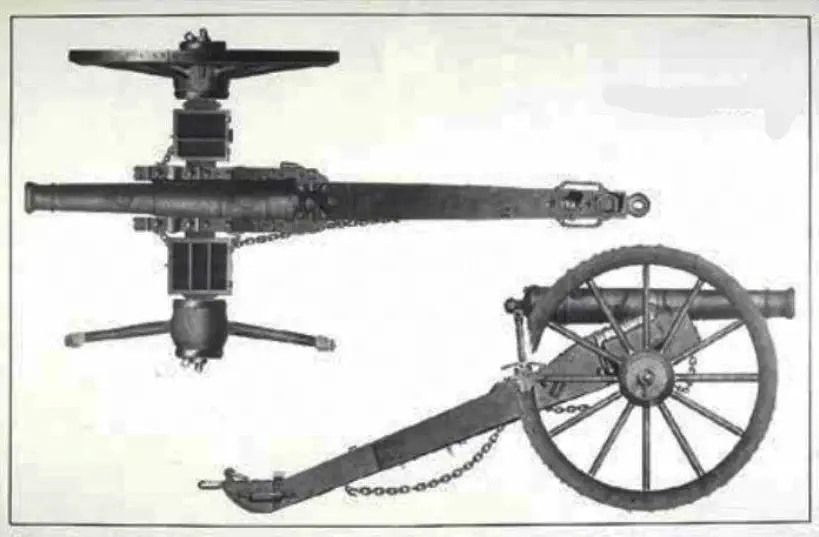
In 1902 the garrison of the fort was increased to 254 men:
- 2 infantry officers;
- 134 infantrymen;
- 3 artillery officers;
- 104 artillerymen;
- 1 pioneer officer;
- 2 telephonists;
- 8 workers.
The main armament consisted of:
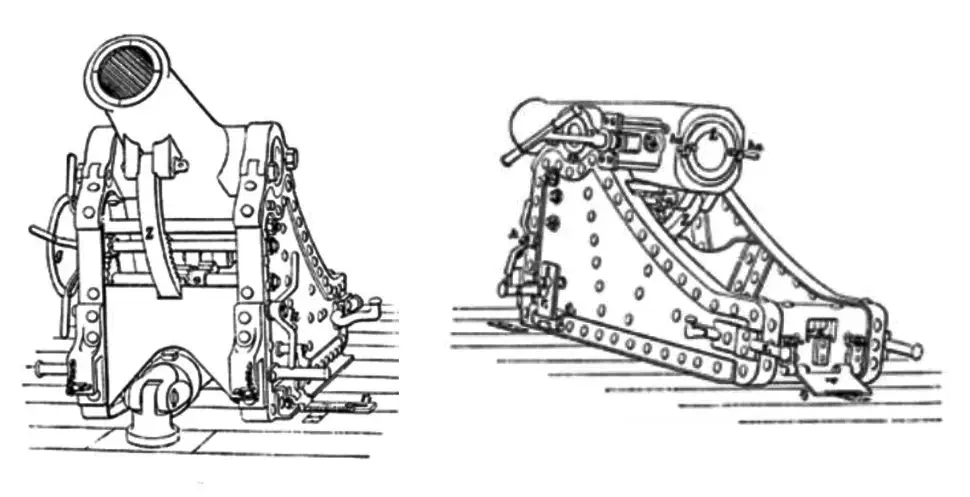
- six M4 90mm cannons;
- two 150mm M78 mortars
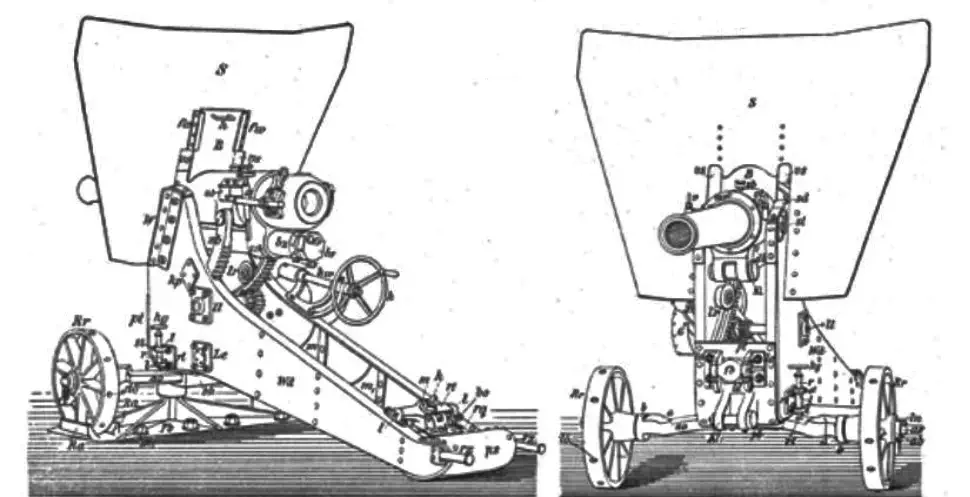
These cannons were located on the second floor of the fortress, which was considered a gun terrace and was covered by a sloping roof.
The fortress also had anti-personnel weapons:
- 2 M89/4 8mm machine guns;
- 16 8mm rifles on artillery units.
Building history
According to one version, the first defensive structure on the site of Fort Kosmac was planned as early as 1838. But at that time there was no clear border between the Austro-Hungarian Empire and Montenegro, so Njegoš's cousin Djordje Petrović, dissatisfied with such a move, gathered some 500 Katunians who attacked and managed to capture Kosmac, which led to the Austro-Hungarian withdrawal from the area.
Construction of the first version of Kosmać did not begin until three years later, in 1841, when Prince of Montenegro Petar II Petrović-Njegos concluded an agreement with the Austro-Hungarians on the demarcation of borders. The construction lasted about 10 years and was completed in 1850.
Fort Kosmac during the Krivošije uprising
On 7 October 1869 the Krivosije Uprising (Bokel Uprising or Dalmatian Uprising) began, which was a response to the General Conscription Act.
It is worth noting that at that time communication between the forts was by telegraph. The Kosmac in this chain received information from Fort Stanjević.
On 21 October 1869, Fort Stanijević was suddenly overrun by rebels, who cut Kosmac off from the coastal control centre in Kotor, shielding it from receiving the current situation.
Despite this, the command of Fort Kosmac received information from a local source that an attack was being prepared, and on 23 October the fort was closed and placed on high alert.
Death of Josef März
In 1869 the fort was commanded by Senior Lieutenant Josef März, who had a lieutenant in command of the jaegers and a firebrand in charge of the artillerymen.
The jaeger lieutenant was very fond of night walks alone in the vicinity of the fortress (either he was an avid hunter or he went to see a girl in the neighbouring village).
On the night of 3 to 4 November, despite the advice of the senior officer, he was once again absent. It was getting towards dawn, but he was still missing. Concerned at this state of affairs, Josef März ordered the gates to be opened and went out to inspect the surrounding area by the moat.
It was here that the Montenegrin rifleman Vukale Stojanovic was waiting for him, and he struck the fort commander with a well-aimed shot. Senior Lieutenant März, wounded, was able to return to the fort, the gate was closed behind him, the attack was unsuccessful, but his wounds were incompatible with life.
The fort lost two senior officers and command passed to the firebrand, who assessed the situation and ordered preparations for a night-time assault. However, the night was quiet.
In the morning, white-flagged Montenegrins appeared outside the fort, bringing with them the lieutenant who had disappeared the day before. They offered an exchange: an officer and the life of the garrison in exchange for the surrender of the fort. The firebrand did not agree to such terms and with a few shots from his musket drove the negotiators away, who also took the hostage with them.
The fort's guards began in turn to fortify themselves. Moreover, as there was now no doubt that locals were behind the lieutenant's disappearance, the firebrand gave the order to bombard their houses with the fort's guns.
Later, imperial troops came to the rescue, but it took another 2.5 months to completely crush the uprising — a peace agreement was signed on 17 January 1870. The Montenegrin attack failed. Although the virtually unarmed villagers managed to «decapitate» the fort, they did not succeed in capturing it and the garrison did not surrender.
The hapless lieutenant has not been heard from since, but the firebrand was awarded a gold medal for bravery.
A plaque honouring Senior Lieutenant März was erected at the site of his fatal wound, which can still be found today near the fort.

Fort Kosmac after 1909
Fort Kosmac was modernised in 1909. It was armed with 150-mm guns, 90-mm KM-04 artillery guns and 8-mm machine guns.
The fort remained in the possession of Austria-Hungary until the end of World War I. After the Austro-Hungarian Empire collapsed in 1918, the entire coastal strip, including Fort Kosmac, passed into the possession of the Kingdom of Yugoslavia, but it was not used at all.

The fort became popular again between 1941 and 1943 during the Italian occupation: the Italians used Kosmac as a prison and stronghold. After the surrender of Italy on 9 September 1943, partisan units attacked the fort from the east with cannon fire, trying to hasten the Italians' exodus. This is how the hole in the wall on the east side was formed.
After the liberation, the fort was abandoned again. At present, Kosmac belongs to the Republican Institute for the Protection of Cultural Monuments of Montenegro.
The Montenegrin Ministry of Culture describes Fort Kosmac as «of outstanding national importance», and proposals have therefore been put forward for its reconstruction. The cost of a complete reconstruction as of 2005 was estimated at about €1.7 million. But as of 2022 the fort remains in a state of disrepair and the destruction continues to progress.
How to get to Fort Kosmac
There are no guided tours and you have to get to the fort on your own.
How to get to Fort Kosmac by bus
From the coast, you can get to Kosmac by taking the intercity bus, which travels from Budva to Cetinje. If you get on the door side, after passing the yellow sign with the name of the village — «Brajići», you should get ready to get off. The required stop will be on the route at the signposted turn. From this point, the route markings (red and white markings on the road) start. The whole trip from the turnoff to the fort will take about 15-20 minutes.
If you are travelling from Podgorica or Cetinje, take a bus to Budva.
In your own or a hired car
The easiest way to get to the fortress is by car. It will take you about 20-25 minutes to get from the centre of Budva to the fort trail. If you drive from Cetinje, the journey time is about the same. You can drive close to the fortress along the Austrian serpentine. But the road, to put it mildly, is not of the best quality, so it is better to leave your car at the beginning of the serpentine and walk the rest of the way. The walk will take only 5-10 minutes and will be accompanied by a stunning view of the bay.
