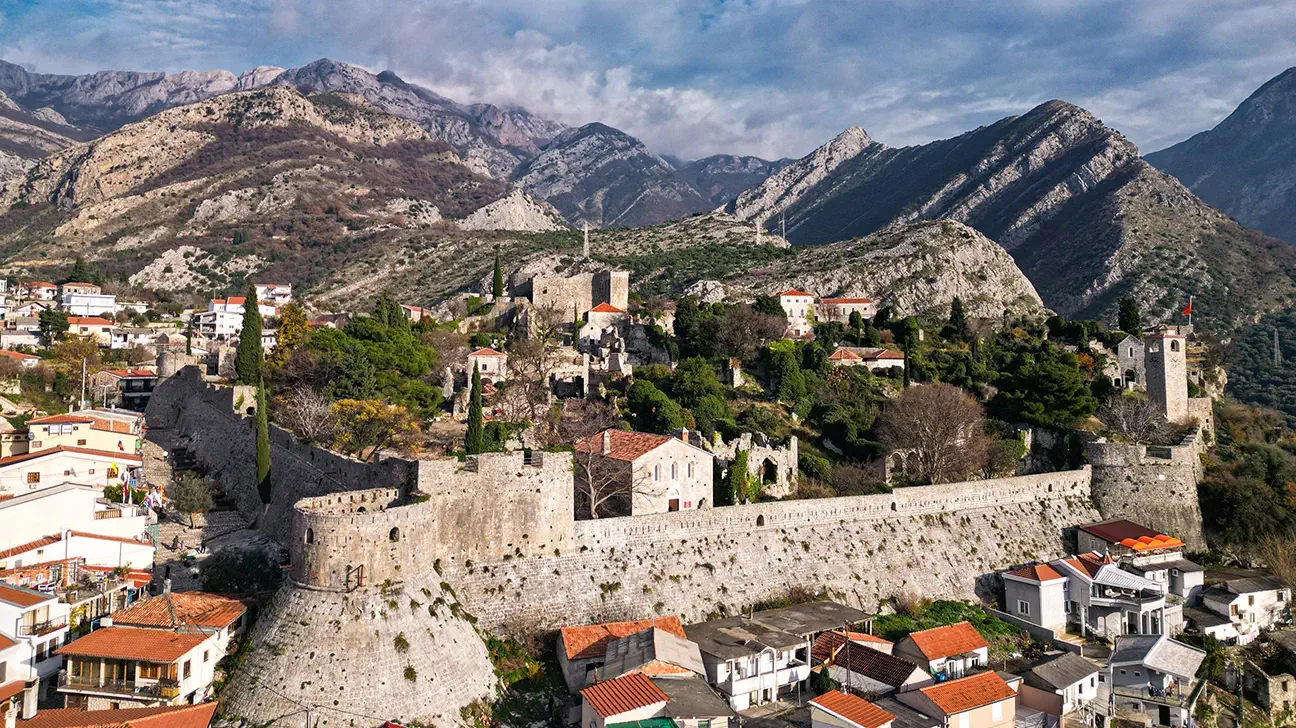
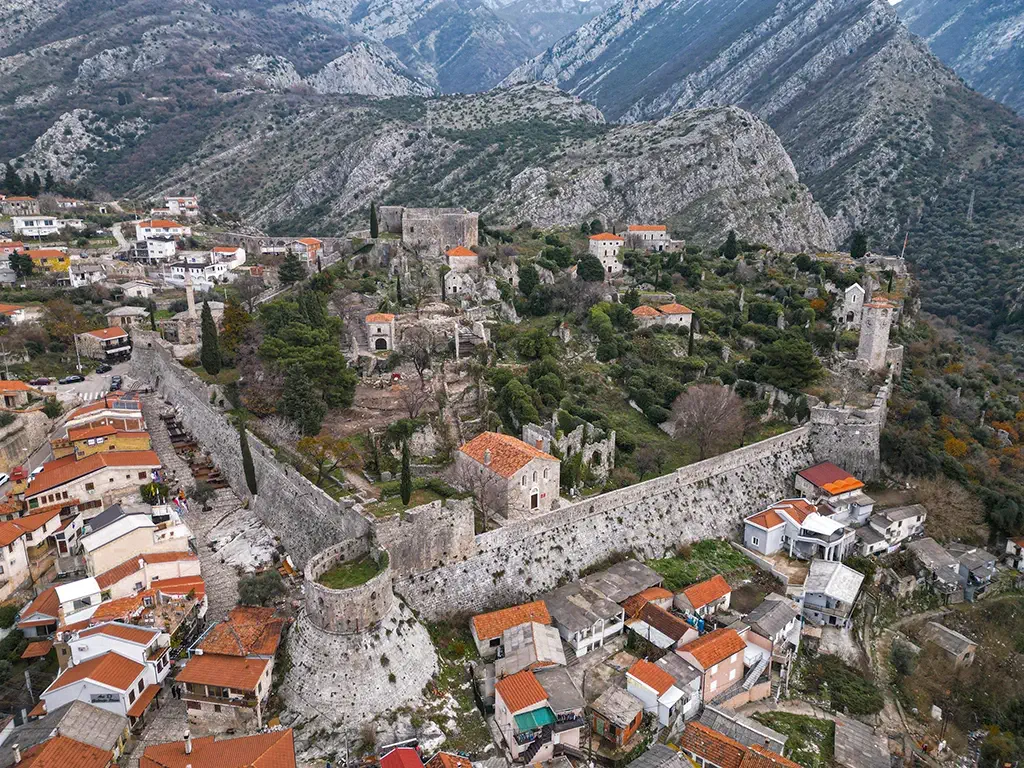
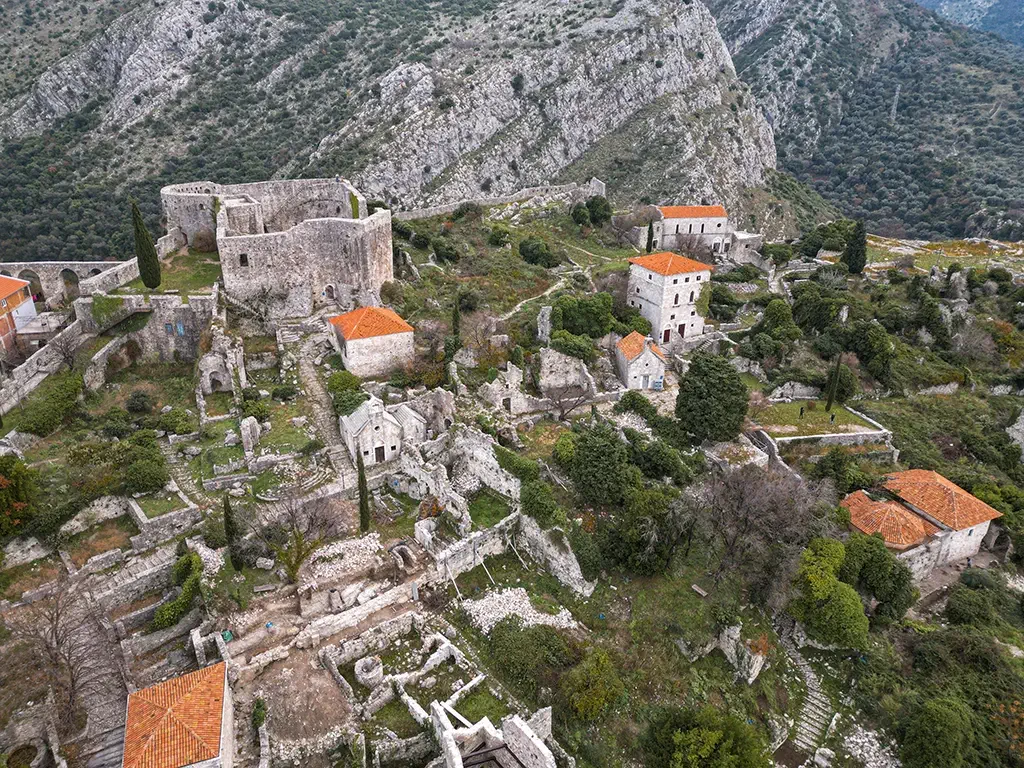
Bar Old Town (Stari Bar) is an open-air museum city located at the foot of Mount Rumija, approximately 5 km from the town of Bar in southern Montenegro. Unlike the historical quarters of Kotor, Budva, or Herceg Novi, no one has lived in Stari Bar for over 100 years. The town itself consists of the remains of a settlement with a history spanning more than 2,000 years.

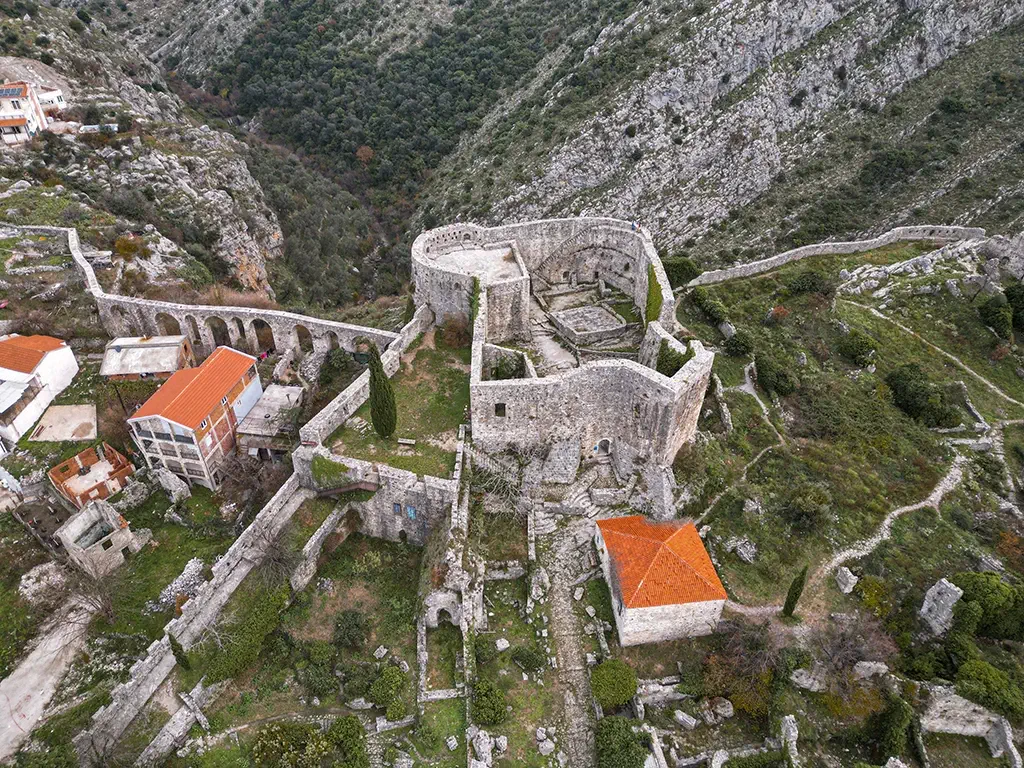
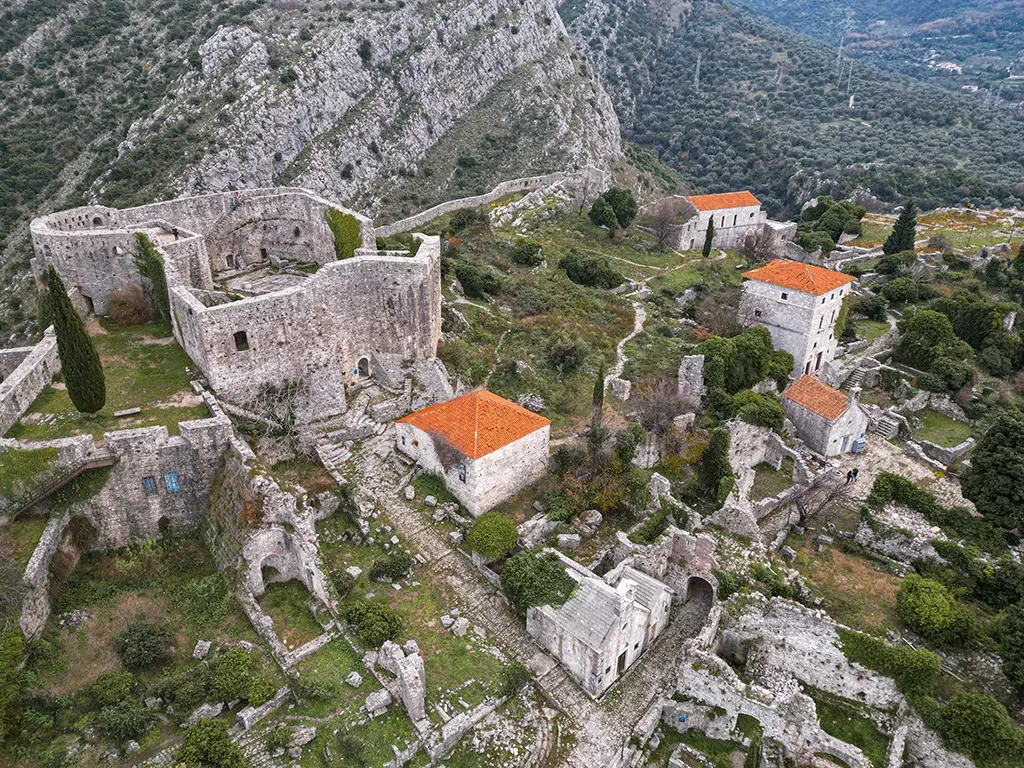
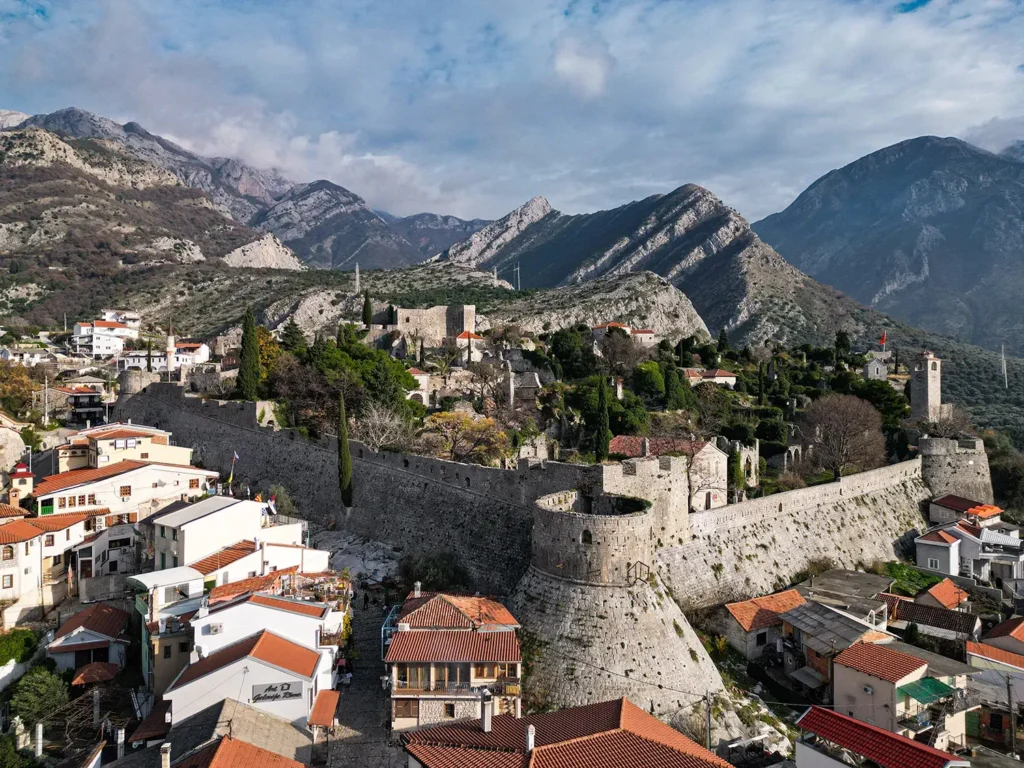
The town occupies an area of 4 hectares. In the past, it was home to around 240 buildings, but today most of them lie in ruins. Among the preserved structures, visitors can see the Citadel, city gates, the remains of the Cathedral of St. George, fragments of the churches of St. Catherine (14th century) and St. Veneranda (14th–15th centuries), the Episcopal Palace (15th century), a Turkish bath, a gunpowder factory, the Clock Tower, and the Turkish aqueduct. The ruins of the ancient churches, built in the Gothic style, retain partial elements of their former grandeur. The town's architecture reflects buildings from various eras and cultures, with Turkish structures standing out, giving Bar its unique character.
History of Old Bar
According to archaeological findings, the first settlement on the territory of Stari Bar was established at the beginning of the Bronze Age. Later, this area, like much of the Montenegrin coast (for example, the city of Risan), was inhabited by the Illyrian tribes. Over time, the Illyrians were succeeded by the Romans, who named the place Antibarium — a city located opposite the Italian city of Bari. This name is also mentioned in 10th-century manuscripts.
Slavic Princes and Bar
By the 9th century, Bar became part of the Slavic principality of Zeta (also known as Dioclea or Diokletia, centered in a settlement of the same name, the remnants of which are located near Podgorica).
In 1042, the principality gained independence from Byzantium under the leadership of Stefan Vojislav. By 1077, in Bar's Cathedral of St. George, his son, Mihailo Vojislavljević, was crowned by Pope Gregory VII, becoming the first king of Zeta — Mihailo I.
Later, in 1089, Pope Gregory VII established the Archdiocese of Bar, which covered territories from Serbia and Bosnia to Ulcinj. The Archbishop of Bar also held the title of Primate of Serbia (a title for a church hierarch in the country with supreme spiritual jurisdiction over other bishops).
Bar, meanwhile, displayed great tolerance toward other faiths: some churches in the city and surrounding areas featured both Orthodox and Catholic altars.
In 1166, Bar once again came under the control of the Byzantine Empire. However, in 1183, the city was conquered and destroyed by the Serbian Grand Župan Stefan Nemanja and, along with the rest of Zeta, became part of the Serbian Nemanjić state.
The 13th century was a period of active development and prosperity for Bar: the city received its charter, coat of arms, and the right to mint its own coins.
In 1356, when the Nemanjić dynasty ended, their maternal relative and governor of Bar, Balša I, declared a new independence of the Principality of Zeta, founding the Balšić dynasty. Notably, this time the capital was located in Bar.
However, soon a new power, the Venetian Republic, began claiming the coastal lands. The Balšićs constantly fought to maintain the independence of their territories, entering into situational alliances. However, in 1421, Balša III, the grandson of Balša I, died during a trip to negotiations in Belgrade, leaving no heir. Strangely enough, after this, the ruler of Serbia, Stefan Lazarević, incorporated Bar into his state.
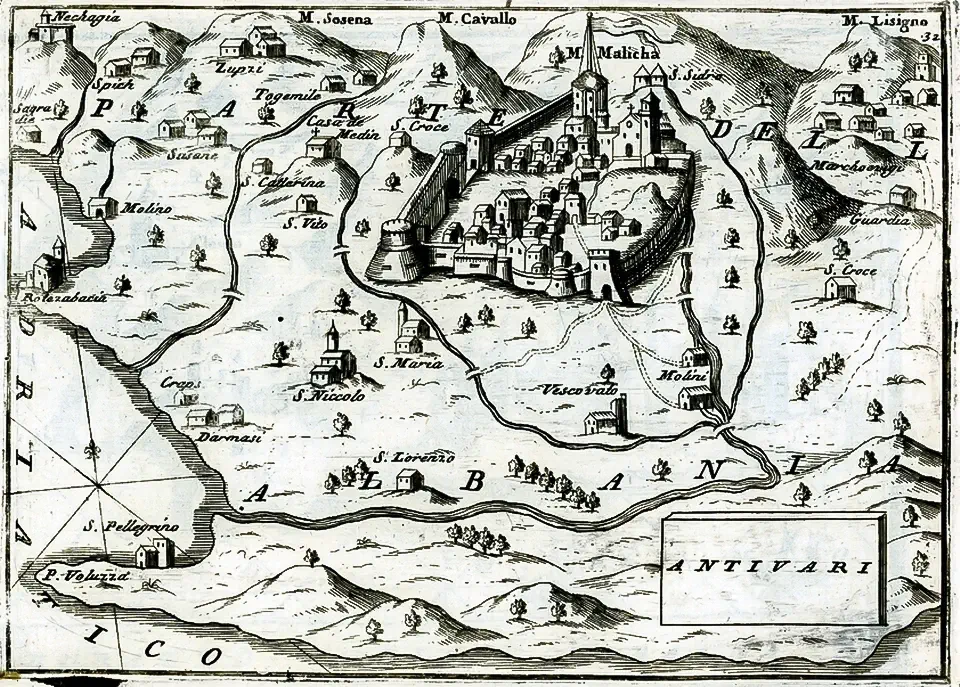
In 1443, the Venetian Republic finally achieved its goal: Bar was incorporated into the province of «Venetian Albania» under the name Antivari.
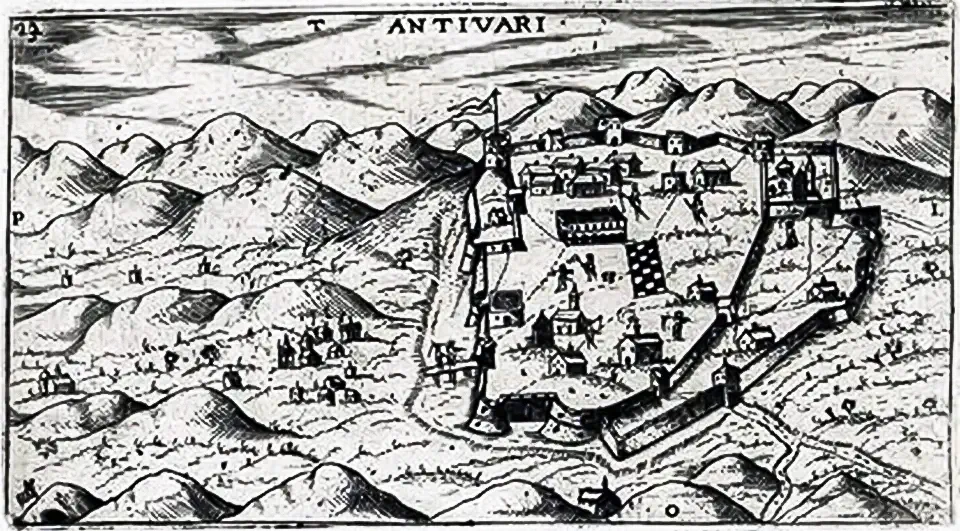
During Venetian rule, the need arose to strengthen the defenses of Bar, which had significantly expanded beyond the old Byzantine walls. The Republic, striving to protect all its territories on the Eastern Adriatic from the Ottoman threat, built massive fortress walls and bastions in Bar, particularly on the northern and eastern sides where the city was most vulnerable. The Citadel was rebuilt, and the defensive structures of the Lower Town were reinforced. During this period, Bar endured several serious Turkish sieges until, in 1571, facing vastly superior enemy forces, the Venetian authorities decided to voluntarily abandon the city.
From the Ottomans to Modern Times
In 1571, the Ottoman Empire conquered Bar for the next three centuries. Minarets, a hammam, a clock tower, and an aqueduct, characteristic of Turkish cities, appeared in the town.
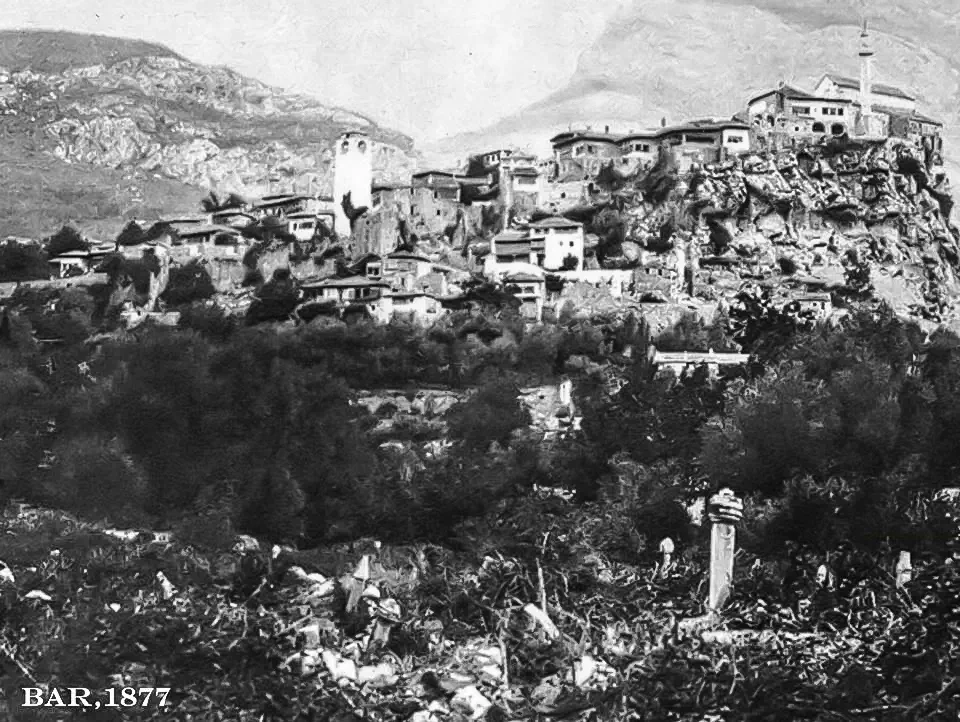
Only in 1878 did Bar change hands again. This time, the Montenegrins, taking advantage of the weakness of the Ottoman Empire, attacked and captured Bar. However, as a result of this attack, the old town was severely damaged. It was decided not to rebuild it, and people began relocating to the coast.

The city began to empty, and the old buildings were repurposed as storage facilities. For instance, the Cathedral of St. George, or rather the mosque that had been established in its place, housed a gunpowder depot. In 1881, the depot exploded, presumably due to a lightning strike. This event caused even greater damage to the already heavily damaged city, and the structure itself was completely destroyed.
In 1912, a similar incident occurred. In the building of the church of the former Monastery of St. Nicholas, which had also been converted into a mosque, an explosion of ammunition took place. As a result, the church, used for storing munitions, was almost completely destroyed — only one wall remained intact.
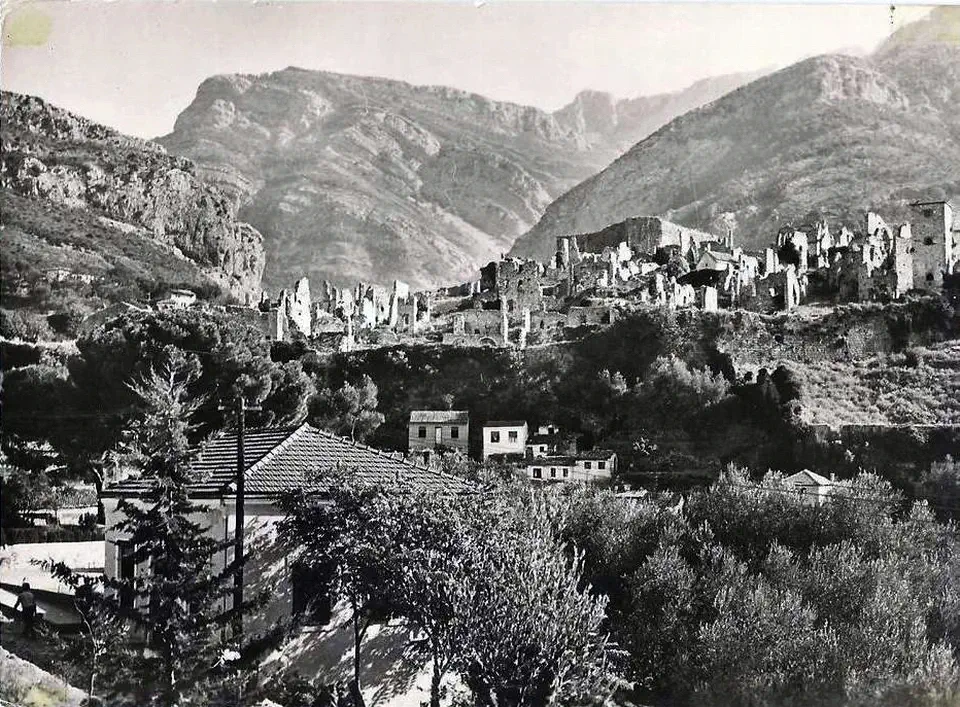
In 1979, a powerful earthquake, with its epicenter located near Bar, caused additional destruction.
Modern Stari Bar is an open-air museum that is gradually being restored, but it is still far from its former historical grandeur.
Where to find delicious national food near Stari Bar
Those who want to try traditional Montenegrin cuisine should visit the restaurant at Stara Čaršija Hotel & SPA. Dishes like meat under the sač, čorba, or ćevapi with kaymak can all be enjoyed here, prepared according to traditional recipes.
How to get to Bar Old Town
Bus
If you plan to travel by public transport, you first need to take an intercity bus to Bar. The schedule can be found on the website busticket4.me.
From the bus station to the Old Town is about 5 km, but a municipal bus runs from Bar's bus station to Stari Bar.
Alternatively, you can take a taxi, which will cost from 5 euros.
Railway
В Черногории не так много мест, откуда можно приехать в Бар на поезде. Детальнее об этом читайте тут. Однако если в вашем городе есть ж/д станция, то вы 100% можете доехать в Бар на поезде, параллельно насладившись горными ландшафтами. Важно отметить, что билеты вы можете купить только в кассе местного вокзала, однако расписание можно посмотреть на официальном сайте.
There aren’t many places in Montenegro from which you can reach Bar by train. You can read more about this here. However, if your city has a railway station, you can definitely take a train to Bar while enjoying the mountainous landscapes along the way. It's important to note that tickets can only be purchased at the local station's ticket office, but the schedule is available on the official website.
After that, your journey will be similar to the one described earlier for traveling by bus, as the train station and bus station are located next to each other.
Personal or rented car
Getting to Stari Bar by personal or rented car is the easiest option.
There are several parking options to choose from: here, here, and here. In general, parking is free, but during the tourist season, local enterprising residents may ask for money. Whether to pay or not is up to you.
